
Gibreel Farishta’s Unchosen Angelhood
The Satanic VersesGibreel Farishta’s rise from beloved screen deity to involuntary angelic figure traces the struggle between faith, illness, love, and the terrifying loss of control over his own identity.
increasing Bearing strength in each event
 decreasing
Bearing strength in each eventdecreasingA Star Made by Others
The Birth of a Screen Angel
A Given Name and a Calling
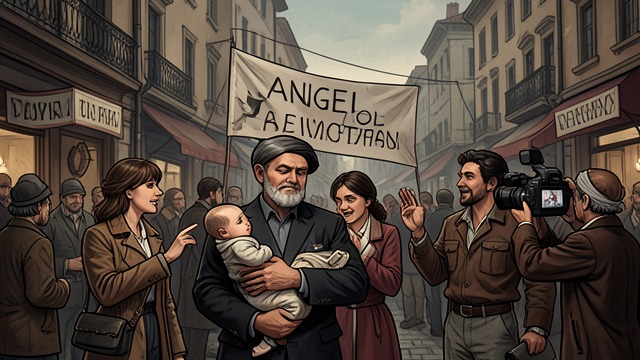
Born Ismail Najmuddin, Gibreel Farishta grows up amid Bombay’s crowded streets and the delivery routes of his father, Najmuddin Senior. His mother, Naima Najmuddin, calls him her angel, and the name later becomes part of the screen identity through which millions recognize him.
Becoming a Divine Image
After his father dies, Babasaheb Mhatre takes Gibreel into his household and arranges an audition. Gibreel begins in comic roles and becomes famous after playing the elephant-headed god in a hit film, followed by further divine and heroic parts.
The public comes to treat the actor and his sacred roles as nearly interchangeable. Yet the private man remains imperfect and desirous, and the distance between performer and persona will matter when he later feels compelled to become the angel rather than portray him.
Illness and Lost Faith
A Survival Without Consolation
A Mysterious Collapse
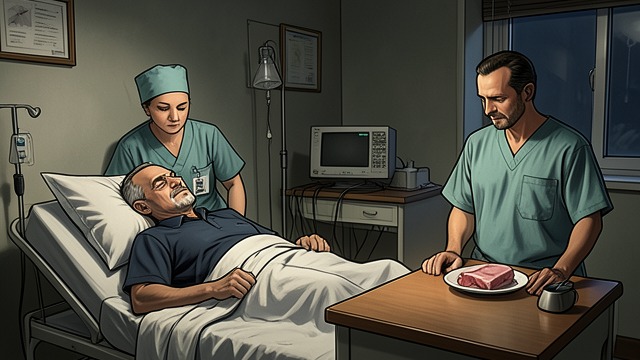
During filming at Cape Comorin, Gibreel suddenly collapses and begins bleeding internally. Doctors cannot explain the cause; for days he lies near death while the country treats his survival as a matter of national importance.
The Silence He Hears
Gibreel calls on God throughout the illness, first pleading, then growing angry, and finally realizing that he feels no divine presence. When he recovers, he eats forbidden pork in public as a deliberate test of whether a divine punishment will follow.
His rejection of faith does not settle the question of God; it makes the later return of religious visions more frightening. He falls in love with Alleluia Cone and leaves Bombay for London, hoping a new life can begin after his apparent rebirth.
The Angel in the Dream
A Vision That Will Not End
Repeated Revelation
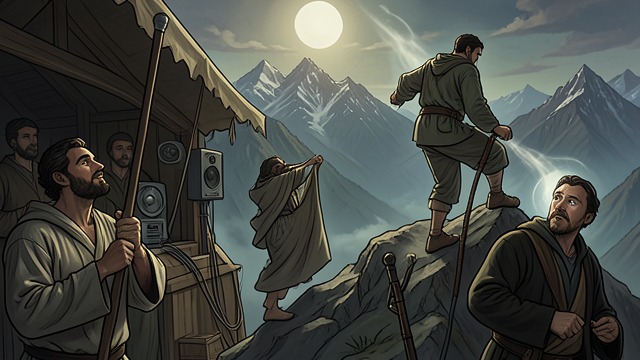
During the hijacking of the Bostan, Gibreel’s fear of sleep grows because his dreams resume where they left off. In one recurring vision, he becomes the archangel Gibreel and watches the businessman Mahound climb Mount Cone and seek revelation.
A Voice Without Certainty
Gibreel experiences himself as both the angel and a frightened actor whose mouth is being made to speak. He cannot tell whether the revelation comes from God, from Mahound’s own desires, or from some other power; the uncertainty becomes part of the torment.
As his visions continue, Gibreel fears that sleep is not a refuge but a route into another reality that may be shaping him. He confides his fear to Saladin, who hears it as madness, but cannot make the dreams stop.
The Archangel Takes Control
From Visions to Command
London as a Mission
Gibreel arrives in London convinced at moments that he may be the archangel, then loses confidence as the city and its apparitions disorient him. After seeing God in Alleluia Cone’s home, he leaves her and interprets the encounter as a command to redeem London.
A Self Divided by Illness
His conviction that he must judge and transform the city intensifies alongside his paranoid schizophrenia. Medical treatment brings some stability, but the distinction between his waking self and the supposed angelic self remains dangerously fragile.
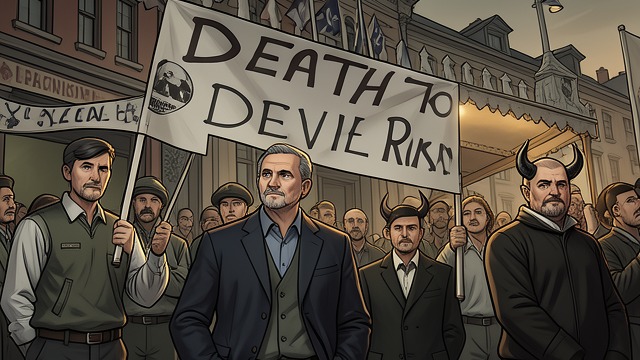
He returns to filmmaking, partly in hopes that familiar work will help restore his hold on reality. At the Earls Court performance, however, he sees a crowd wearing devil horns, believes the adversary is present, and disappears into the very delusion treatment was meant to contain.
The Last Trumpet
A Final Judgment
Punishment in the Streets
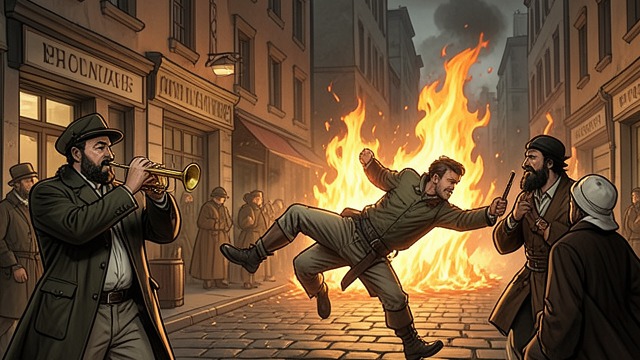
Gibreel wanders London carrying a trumpet he calls Azraeel, believing himself authorized to deliver divine judgment. He uses it to burn pimps who exploit young girls, then brings fire to Brickhall, interpreting the desires and rage around him as a command.
Recognition and Collapse
At the burning Shaandaar, Gibreel sees that Saladin’s apparent demonic identity is not an outside force possessing him, but an evil arising from Saladin himself. Even so, he chooses to save the trapped man, carrying him through the fire and smoke to safety.
Gibreel later returns to Bombay, where the death of Sisodia and the fatal fall of Alleluia leave him increasingly unmoored. When police arrive and he believes the recurring sickness will never end, he shoots himself with the gun concealed in Changez’s lamp, ending a life caught between genuine love and a devastatingly destructive conviction.
Gibreel’s childhood and early film career in Bombay
Shortly before Gibreel leaves Bombay for London
During the 111-day captivity aboard the Bostan
After Gibreel returns to London and before the Earls Court performance
From the Brickhall crisis to the novel’s ending
